Martagon Division II
Martagons Lilies are an earlier division that bloom along side of the asiatic lilies for early spring-summer blooms. I am smitten with this division,— thus, making them my speciality for you to buy martagon lilies online here at Hartle-Gilman Gardens.
The hybrids (meaning all of the named martagons that you purchase from growers or nursery centers) were made from species lilies, an isolated group, L. Distichum, L. Hansonii, L. Martagon, L. medeoloides, and L. Tsingtauense. As in the Asiatics, the Martagon species range from all over the world. Crosses and more crosses make up the hybrid Martagons we see today in our gardens. Some are purposely crossed in trying to obtain unique and interesting patterns, and some are naturally crossed by bee pollinators. I have done both types of crosses with success, but I have to admit that the bee seems to know what to cross with what. Meaning compatibility of pollen versus stigma. They also seem to know who would be the better mother caring for the seeds versus who the donor will be with it’s pollen.
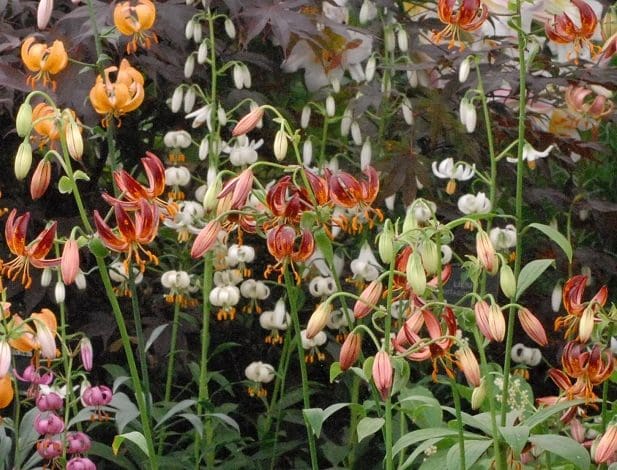
Pretty much all, are unique with the characteristics of small, sweet blossoms, that have a unique curved petal. They range from colors of earth tones to vibrant raspberry. Some are spotted, some are even shiny as well as some will have different stem color. ( green, brown, creamy tan and even molted that occurs naturally and not an indication of stress )
Another very interesting, unique, and most distinguishing characteristics are the whorls of the dark green or molted patterns in the foliage. They have how I would explain, a circular habit forming off the stem. You can recognize it right away, if it is a Martagon that you have growing in your gardens.
I have a private collection that is dedicated for my programs on a small inner city corner space that is the headquarters for Hartle Gilman Gardens. And I also have another space that is off the property that is a dedicated garden for Furthermore Lilies™️ A home where my designer martagons grow and are tested for disease resistance, endurance of climate changes as well as studied over the test of time for bloom ripeness and heaviness, as well as height, vigor, zone hardiness and above all beautification for home gardeners . There are a lot of photos to take a look at with the development, and my notes are hidden from public view until I feel they are worthy of introducing. Introduction can take up to 10 seasons.
Each morning during peak bloom time, I go on the same walk checking out the light, temperatures the dew factors. Writing notes of what I see, hear, feel and even taste within the morning atmosphere. Visualizing all of the swell of the buds that are ready to burst. I quickly put on my dancing shoes for those steps of highly versatile, and expressive styles of steps. They are often characterized by a blend of many, often improvised movements of my aging body. — including jumping over hoses, slipping down damp stone walkways or tripping over the freshly loose gravel of a visitor that dug a hole to hide a nut for future snacking. Maintaining precise foot work, ( staying upright ) there is a connection of using hand movements that incorporates the delicate elements of natures finest moments and movements of sex in the gardens. Ripping and pulling the anther, stroking and caressing the stigma,—-The techniques of Plie, Releve, Pirouette and Arabesque may not be as graceful but all the same it is a jump, leap, turn and a bow of the most awkward of ballets ever to have been witnessed. Precise timing is a key factor as well as the temperatures of each day the bloom is fertile. Some may be bagged and tied down, just incase they open before I have a chance to come back while other buds that are freshly open are inspected to see if the stigma is moist and ready for fertilizing. Hybridizing is and can become very complicated and truly a dedication if one has a vision of the unique outcome that perhaps will occur with its first bloom some 7 seasons from now. Yes timing is everything, but for now I only hope I am alive to see my work from seven years of yore.
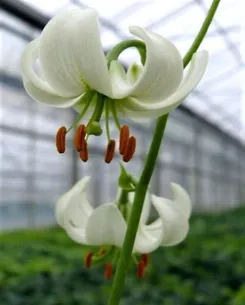
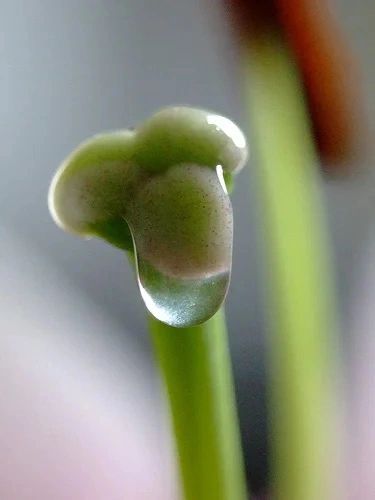
. Taking small anthers that are suspended on the end of long filaments and applying it to a sticky moist stigma. The picture of the featured white martagon shows the anthers and the sticky stigma for you to view.
Let’s get down to the discussion of Martagon Division ll
THE TRUTH ABOUT MARTAGONS
Martagons are usually exclusive for fall delivery here at Harte-Gilman Gardens. Growing martagon lilies are rewarding and truly not so challenging. There are some seasons that I have opened up opportunities for those that want to grow martagons with planting in the spring. I suggest that if the spring martagon that you purchase from me or others decide to blooms the first season, allow it to bloom, take a quick photo or two, and then, cut with a scissors the flowers and do not let any part of the plant form seed its first season. You will have a single stem of green for the rest of the season, it will eventually decay and turn brown for fall clean up. Doing this will ensure years to follow, a magnificent display.
Martagons lilies are cold climate lilies that do best with a winter resting period. I have some of my guest here that actually grow the martagons in a warm zone and after they are done blooming and turning brown, will take the proper measurements to store them in coolers for a few months only to start the process over again. I am one that is known to do this with several of my lilium species that do not want freezing -20F winter temperatures but growing Martagons in the Midwest and surrounding areas, they are very happy indeed with the below zero temperatures in the grounds where there is a proper snow cover or leaf litter that covers them with protection. I have many deciduous trees within the properties and when I do some fall clean up, I dump all of my leaves over the martagon beds.
Martagons are very sought after and they unfortunately come with a price tag that can be steep indeed. They are slow growers from the start as from seed to first flower in nature can take about 7 winter seasons. There are ways that you can trick the seasons of your new baby martagon seedling if your growing them in controlled environments such as a set up laboratory with sunglow lighting within the home or in glass houses outside. I have even seen some grow from the window sills in their home and offices.
Truth about Martagons, some people will say that they sulk—-
What that really means —-
(based upon my observations ) is that there could not be enough quality root systems established to have an emerging bloom stalk, or it may emerge, grow a foot or two, and collapse. Hence sulking Fear not— This can be a sign of stress, but more than likely, it usually is a sign that it is just not mature enough to flower. I usually will leave it alone for a season, and wait for the grandness the following season. Marking the space will help you remember to not to disturb that particular area with other such plantings. It usually never fails with this sort of patience to await a season — you then can stand back and watch for seasons to come and go with the vigor of your established martagon that will reward you with multiple stems with each new season. We just have to have some patience.
Martagon lilies are hardy all the way to zone 3, a friend i know has them in zone 2 and is very successful due to the enormous snow cover they recieve during the winter months. So they do extremely well here in the Midwest. They grow in full sun in my raised field boxes as well as in dappled sun rays among the hosta beds at my home. They can grow just about anywhere but not where the conditions are extremely wet and soggy nor do they do well in deep dark shade environments. So—keeping them away from the drain spouts is a good idea. Planting them in understories are good as long as there is not a heavy shaded areas where you feel the environment change drastically when you walk into that area. Usually if there is a drastic change in temperature there is also a drastic change in the dampness of the earth. It could be too wet and deteriorate the martagon bulb, If that is the case, Plant them on the edge of the deeply shaded area. Using them as a doorway of your forest flora.
They can get as tall as 3 feet, yet I have (‘Lusher’) some that are almost 6 feet tall as they tower with 30 buds. I also want to let you all know that martagons flower from the bottom up on the inflorescence. With this behavior, the entire plant is in bloom for a couple weeks with a showy display of colors that come in an array of spectacular colors and patterns.
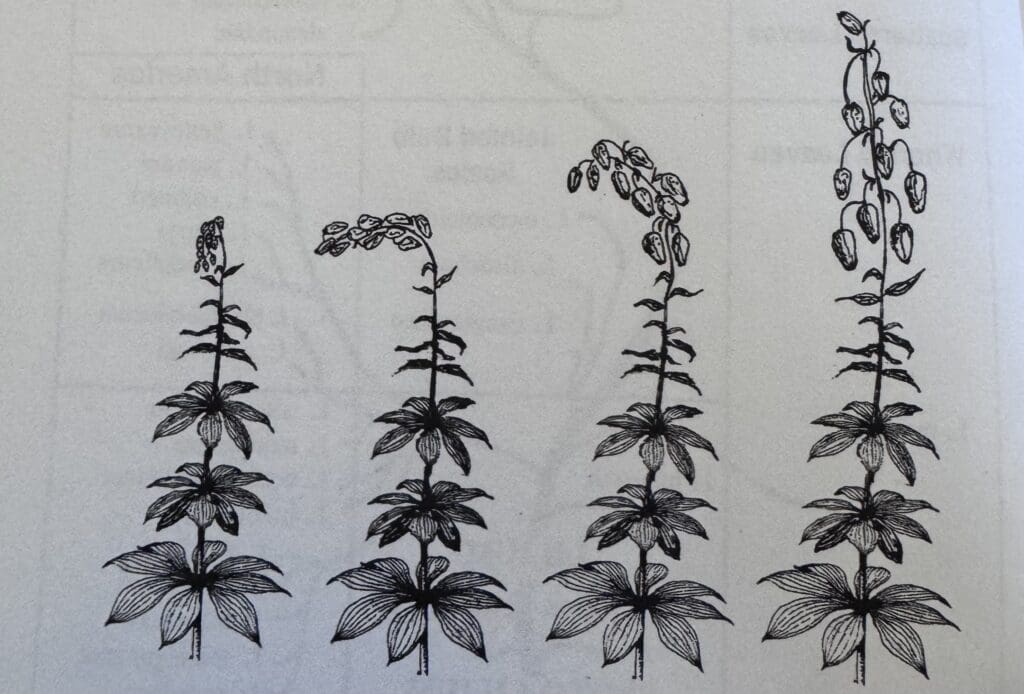
This back and white illustration was from one of the many books I have studied of Martagons. The photo demonstrates the prelude to bloom, ascending and elongation of the buds as they form. Once in position, the buds will open from the bottom up in succession. Offers further study of to date the only plant that unfolds in this type of manner.
Do I have a favorite?
I love the color or Helen Skinner that I acquired a season ago. There are many snowy whites that fade to a creamy yellow that are also attractive.
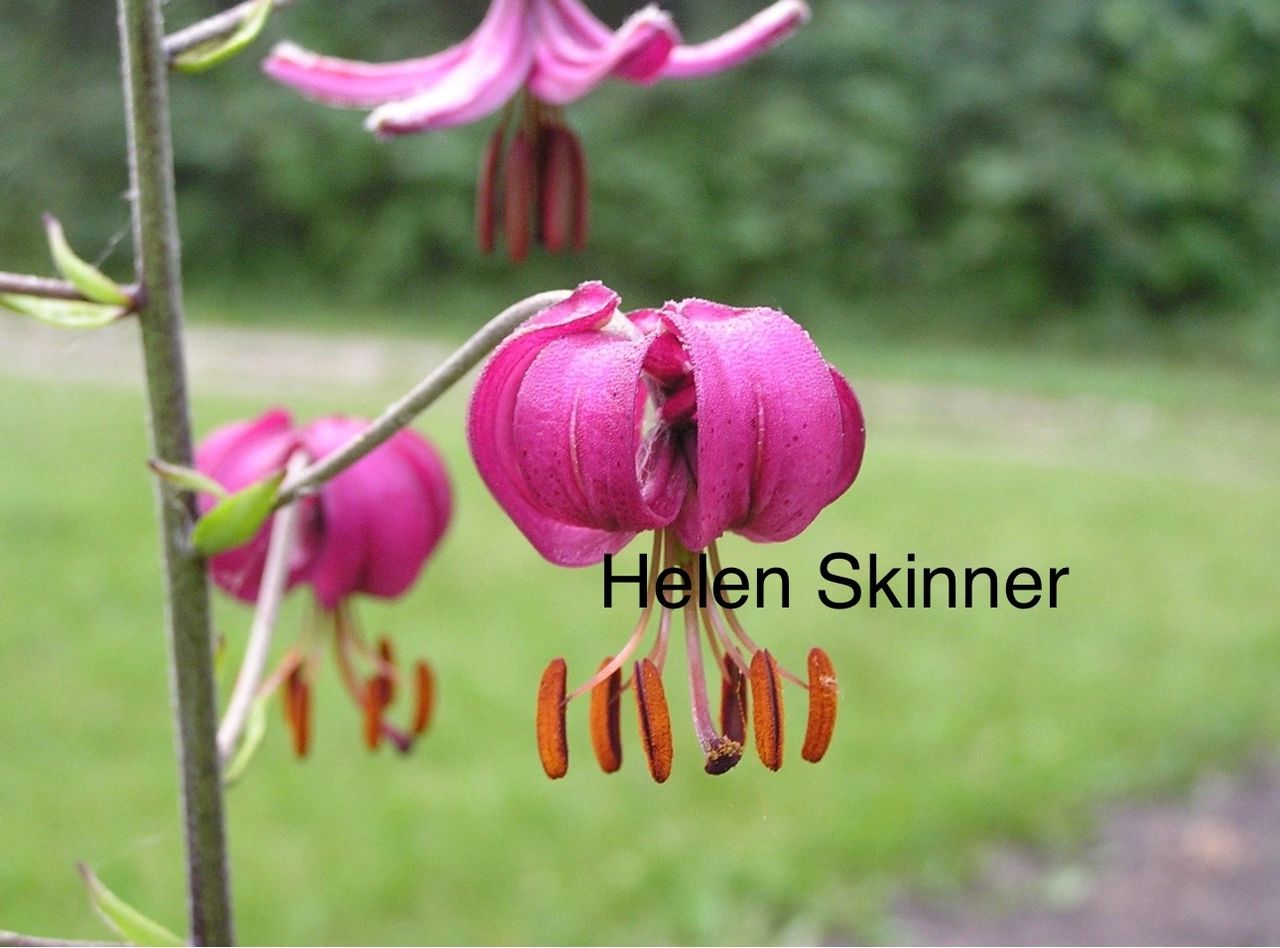
The Cherry stigma compliments this beauty well and has been on the bidding block with the ARLS ( ALBERTA REGIONAL LILY SOCIETY ) 60.00 was the winning bid.
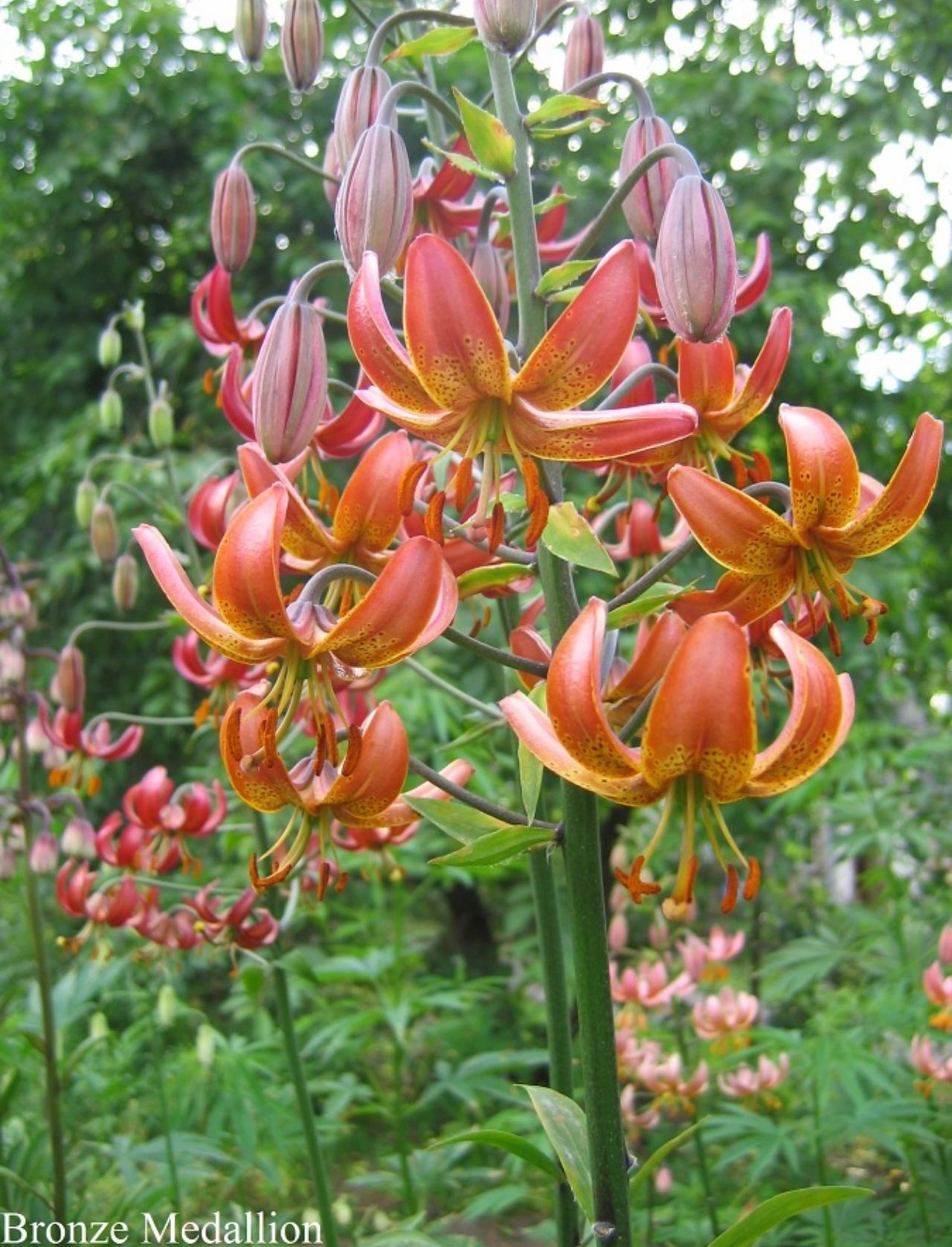
This beauty is another martagon that is doing really well within the display gardens and has disquinished larger florets than that of Helen Skinner in the first photo. The distinct patterns and spotting are rather lovely with the grace and form of the buds. 📷 dh The florets are easily 3-4 inches across making them rather attractive.
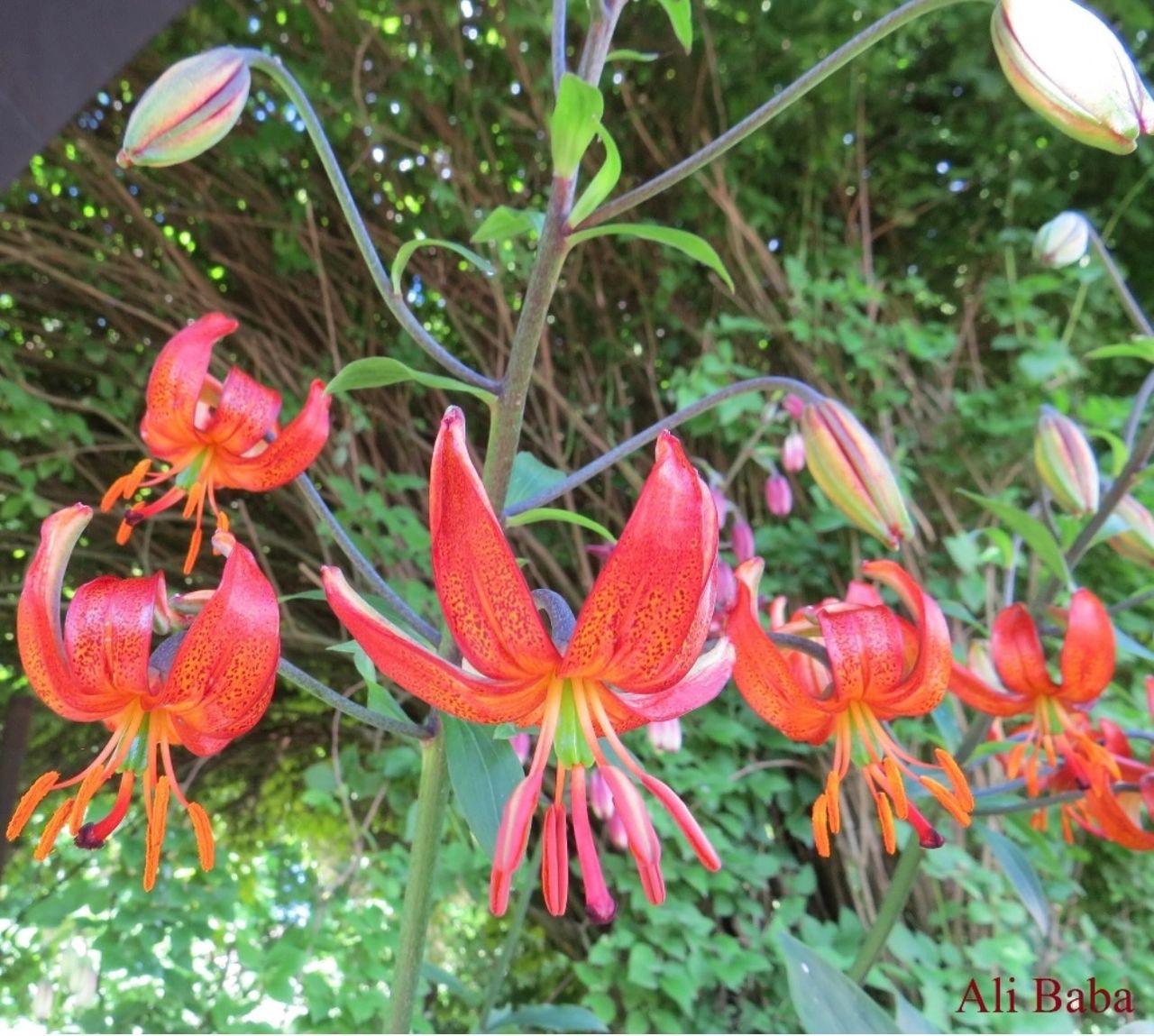
We will also see here that there are tepals are pointed and have a design that appears of some of the species from the western coast of the United States. Curling completely back onto itself.
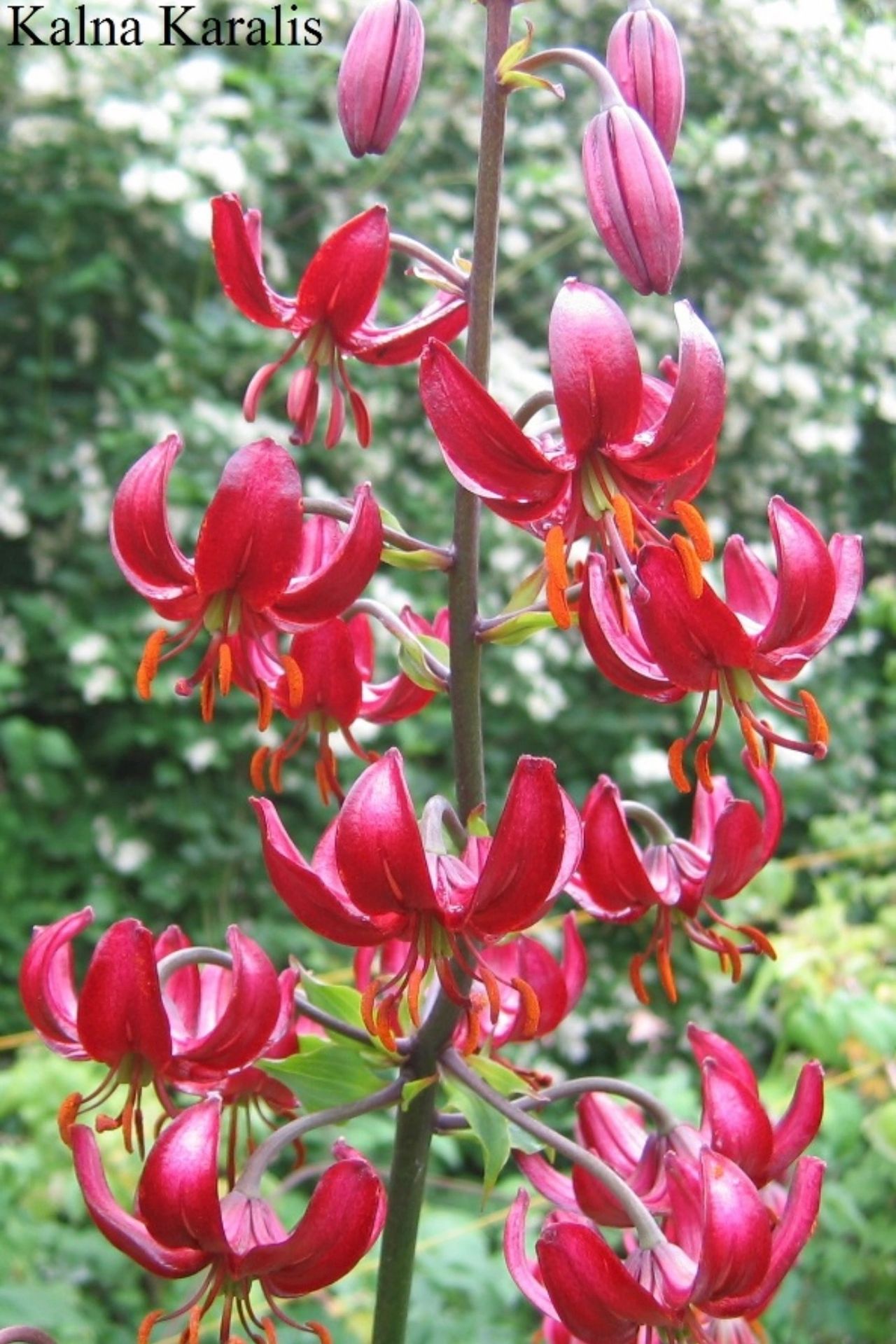
📷 dh—-Kalna Karalis
The famous Black Prince martagon was on the auction block and was sold to a collector for 700.00 this year — Here is a photo of the hybridizers family member that has it in his collection.
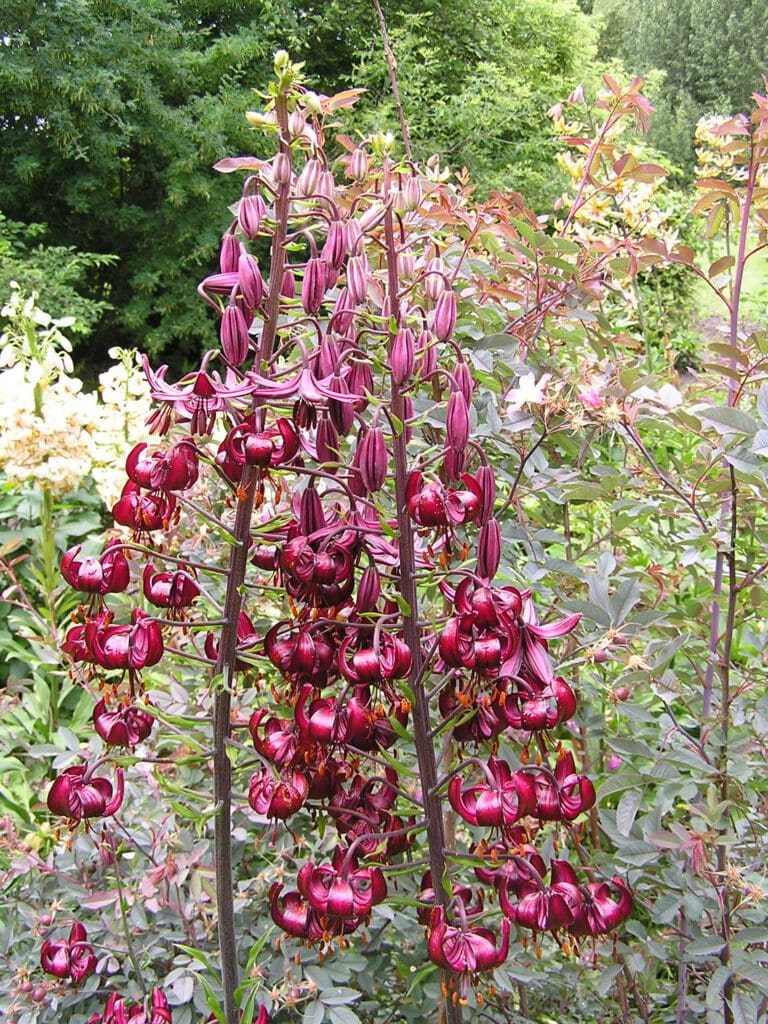
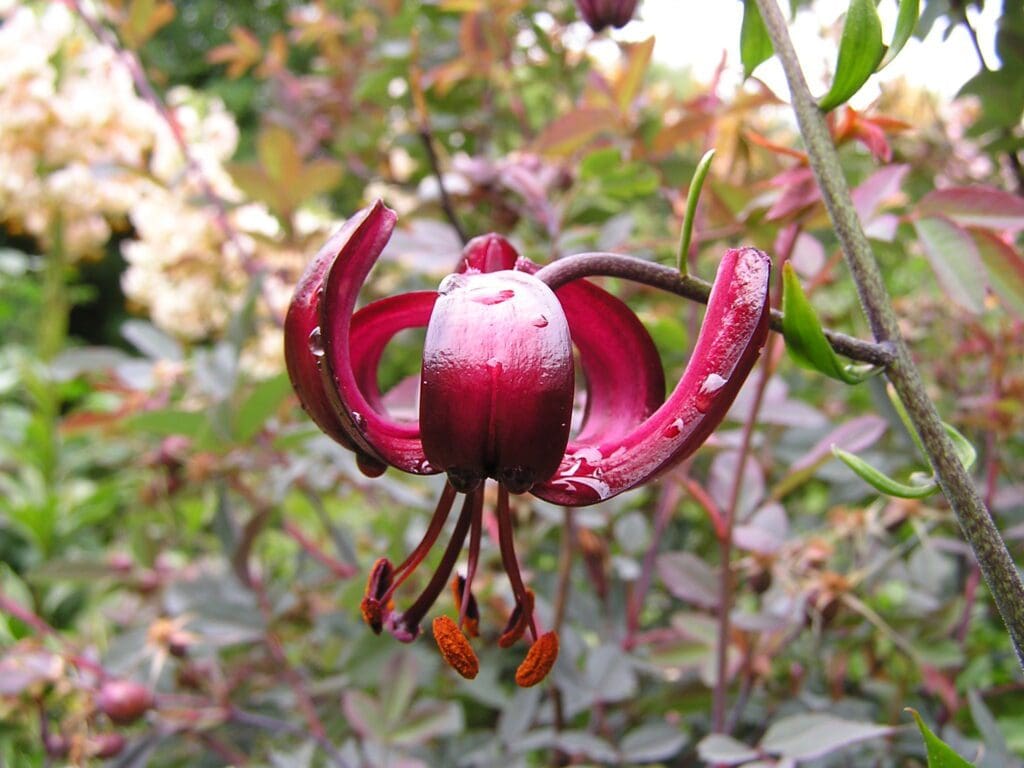
Is the investment worth it? Hands down… I can’t have enough feeling that they are one of the most rewarding perennials that I have, thus creating a sister company that will strictly pay attention to detail of the martagon at Furthermore Lilies™️.. see link above. I have several colonies of each type as I want not just one but many within the gardens.I tend to buy them all even if I have the variety already. I have found that from different growers some are not what they may actually be , thus having another unique hybrid that blooms just a little bit different and may have less or more patterns in the petals. With the array of colors that are out there, they all shine in the semi shady environments. Please remember that they do grow well in full sunshine, just as with most perennials, the blooms easily fade and the duration of flowering is shortened.
Questions: What is the best type of soil for my new martagons? They like acidic soils well drained conditions but have done well with just garden soil that has been amended with leaf mold and fertilized a couple times a season.
What would you recommend to try if you have never grown a martagon before? I would recommend many of the Morning series, they are dependable martagons and are not going to drain the bank account. Though they can be a 20 dollar bill, most perennials that become heirlooms within the gardens cost that. Remember from seed to its first bloom is approximately 7 winter seasons.
Is there special care that the Martagons need to keep my investment healthy? I give them a really good drink of fertilizer right after they are done blooming and I cut all the flowers off that I do not want to collect seed from. I will be sharing my recipe on a new thought within this blog as it is a process to make and it stinks to high heaven.
More on this later as I must go and plant some of my very own box of lilies that have arrived in the mail today.